
How Fossil Fuels Kill
And how reducing our dependence on them saves lives

by Richard Conniff
When Americans talk about fossil fuels these days, it’s mostly to grumble that the cost has shot up by more than a buck a gallon from a year ago. That’s an extra $15 or $20 for the weekly fill-up, based on the current average of $4.47 for a gallon of regular nationwide (and much more in Europe, where the average now tops $8 a gallon).
That’s a serious issue for families trying to scrape by in hard times. But what matters isn’t really the price at the pump. It’s the hidden (and much larger) price all of us pay with our lives.
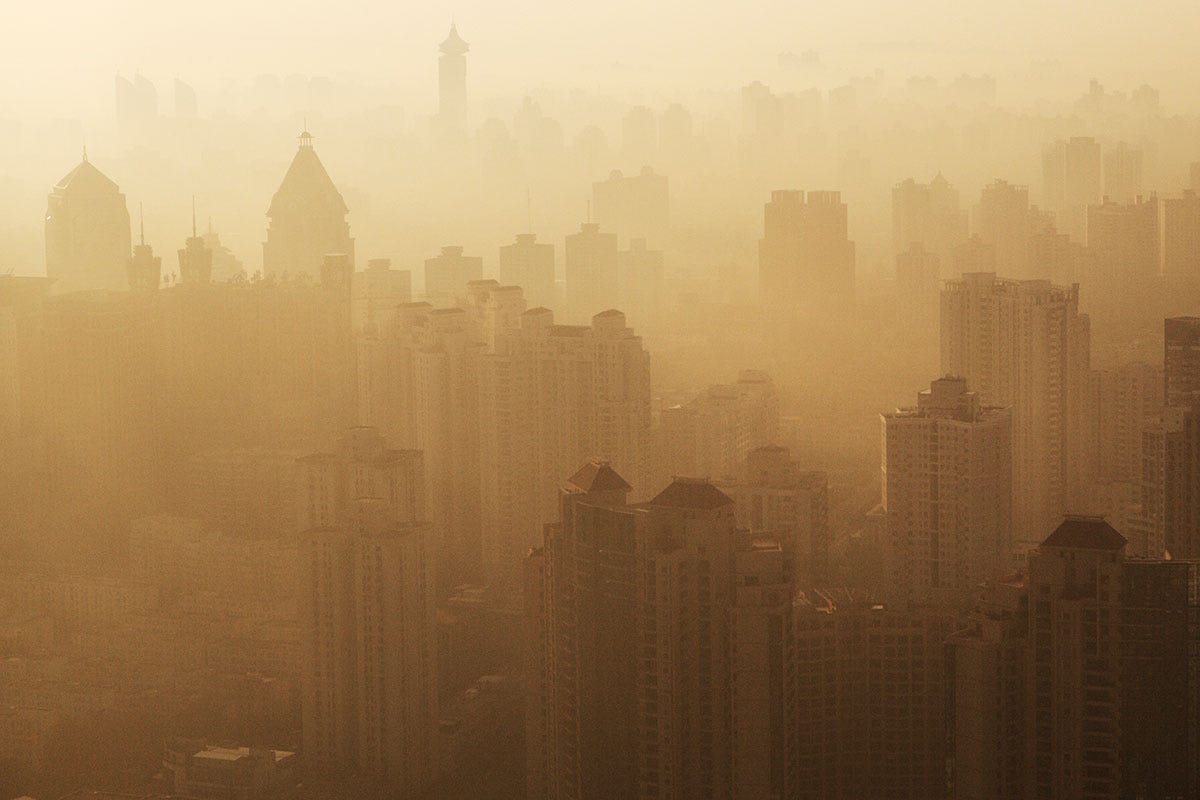
Fossil fuels kill. They do so by way of air pollution that causes heart attacks, strokes, pulmonary disease, cancer and other afflictions, and the numbers are daunting. When you look at all stages of oil and gas production and combustion, from “drill, baby, drill” to “pedal to the metal,” the resulting air pollution kills 91,000 Americans every year, according to a study last year in the journal Science Advances.
Round that up to more than 100,000 deaths a year to account for one major caveat: The researchers based their results on 2017 data—and U.S. oil and gas production has increased 40 percent since then. That death toll is in addition to what oil and gas air pollution does to children by causing thousands of preterm births every year, and hundreds of thousands of new cases of childhood asthma.
The fossil fuel picture looks even worse when you add in the damage done by air pollution from coal-fired power plants, of which the United States currently has almost 200 still in operation. These power plants cause 6500 deaths a year, according to a 2024 analysis by the Clean Air Task Force, a nonprofit focused on reducing air pollution. Just to be clear, this doesn’t count deaths from climate change and automotive accidents, just air pollution. (The numbers are also massively more deadly when you go global. )
These statistical deaths may not mean much at first glance, but I find them deeply personal. I remember seeing my grandfather in a wheelchair with a stroke, and my great aunt, also a stroke victim, bed-bound and deeply frustrated at being unable to say anything but the nonsense phrase ding-a-ding-a-ding. They lived through the worst of twentieth-century fossil fuel air pollution, when the death toll generally went uncounted and unrecognized. So did my father, who died of congestive heart failure. Moreover, they lived in states, New York and New Jersey, that rank even now, as third and fifth worst for sickness and death from oil-and-gas air pollution, according to the Science Advances study. (California and Texas rank first and second, with Pennsylvania filling out the top five.)
You may find that this thread of history runs through your family, too, once you start to look a little more closely. And it may not just be history: When I look around, half the people I know in my age group have some sort of heart issue, from fluttering valves to fibrillating atria.
Is it fair to attribute past or present cardiopulmonary sickness and death to fossil fuel air pollution based only on circumstantial evidence? There are two ways to answer that. First, the fossil fuel industry has repeatedly lied to us about the health and environmental consequences of the pollution it produces. So at this point, here’s what genuine fairness would mean: In a just world, we would require industry executives to make up for their duplicitous track record by providing detailed evidence under oath, every time they want to drill a new well, build a new plant, or introduce a new product, that the project is safe for people and the planet.
The second way to answer is that the evidence against fossil fuels is abundant and conclusive. The problem—one the industry happily exploits—is that we don’t normally see the sickness and mortality that result from our dependence on fossil fuels. That is, we don’t connect cause and effect the way we do, for instance, when a driver runs a red light and kills a child. When smokestack or automotive exhausts send a child to the emergency room with an asthma attack, that’s much less direct, less immediate. But the connection is no less real.
The best way to adjust our vision to the reality of sickness and death from fossil fuel air pollution is to look at real-life cases where the pollution source has suddenly stopped or been reduced for one reason or another. When scientists have before-and-after data in such cases, they call it a “natural experiment.” That is, these aren’t results extrapolated from a laboratory study testing some scientist’s hypothesis on mice.
Natural experiments describe what happened to real people.
For instance, during the 17-day-long 1996 Olympic Games in Atlanta, careful planning, including the temporary provision of round-the-clock mass transit, led to a 22 percent reduction in peak weekday highway traffic. The result was a sharp drop in air pollution from automotive traffic—and a 42 percent decrease in acute care visits by children with asthma.
For the 2008 Olympics in Beijing, where the air was often barely breathable, China went much further, cutting road traffic in half and shutting down major commercial and industrial polluters for the duration. Every 10 percent reduction in pollution resulted in about an 8 percent drop in deaths, according to a 2016 study, mostly by preventing heart attacks, strokes, and lung disease. During the games, deaths in Beijing and other temporarily protected cities declined by about 15 percent, with the effect concentrated in small children and the elderly. If China did that for urban populations nationwide, the study suggested, it would avoid 285,000 premature deaths a year, mostly in the very young and the elderly.
The most unexpected of these natural experiments—and the one with the most enduring benefits—got started in 1990, when the U.S. government took action to stop the threat of acid rain pollution. The major culprit was the sulfur dioxide (or SO2) spilling out of coal-fired power plants, mostly located in the Midwest, with prevailing winds carrying their smokestack exhausts across the entire eastern half of the country. Alarmed utility executives warned, as usual, of massive, unsupportrable costs if any regulation aimed to fix the problem.
The George H.W. Bush Administration pushed ahead anyway with a novel, market-based system. It set a steadily decreasing cap on SO2 emissions from the fleet of coal-fired power plants, and let each company decide how to meet its target. Some immediately installed smokestack scrubbers. Other bought pollution rights from them, betting that the costs would come down in a year or two. This cap-and-trade system dramatically cut SO2 emissions, reduced the cost to industry, and avoided the worst acid rain threat.
What no one expected was that it also saved lives. SO2 turned out to be a major factor in the formation of small, inhalable particulate matter, known as PM2.5 pollution, which passes through the lungs into the bloodstream to cause havoc in the cardiovascular, pulmonary, and even neurological systems. The 38 percent decline in SO2 over the first ten years of the program, from 1995 to 2005, meant that deaths from cardio-respiratory conditions dropped by as much as 23,488 people a year—just in the eastern half of the country, according to a 2021 study in the Journal of Public Economics. The annual cost of the acid program turned out to be modest, no more than $2 billion a year, according to a 2013 study—while the estimated benefits ranged from $59-116 billion a year, almost entirely in human lives saved and medical emergencies avoided.
It has become the classic case study for why carefully planned environmental regulation matters, not just for public health but for the economy. (Sadly, it’s also one reason the Trump Administration now counts only the costs regulations impose on industry, not the benefits to average Americans.) In addition, the acid rain program opened researchers’ eyes to all the other ways fossil fuel air pollution damages human health.
You’re probably tired of hearing about natural experiments. But stick with me for just one more, conducted at our considerable expense over much of a century by the oil and gas and automotive industries. It’s the one that got me started on this rant, after seeing a recent article in the Journal of the American Medical Association by Bruce Lanphear, a public health researcher at Simon Fraser University.
A little history: The discovery that the addition of tetraethyl lead made car engines more powerful and efficient led to the nationwide introduction of leaded gas in the 1920s, despite warnings from public health experts about the likely dangers on cardiovascular and other grounds.
“In the US, coronary heart disease mortality rose in the 1930s and 1940s alongside expanding production of leaded gasoline,” Lanphear writes. “By 1968—the year production peaked— coronary heart disease accounted for 1 in 3 deaths.” Some of that increase was due to the rise in cigarette smoking, and some was due to others sources of air pollution, but even now, because of continued use of leaded gas in many countries, “lead alone accounts for nearly 30% of coronary heart disease deaths worldwide,” says Lanphear.
In the 1960s, the campaign to get lead out of the environment focused mainly on the debilitating intellectual damage to children. But researchers also demonstrated that it is a major factor in the narrowing and hardening of arteries, among other cardiopulmonary effects. As the U.S. began to phase out leaded gas in the 1970s, Lanphear writes, hypertension prevalence and death from cardiovascular disease went into “a steep and sustained decline” in parallel with leaded gas production and blood lead levels.
Coronary disease wasn’t just “a disorder of personal habits and metabolic dysfunction.” It bore “the vascular imprint of industrial exposure.” That thought makes me think differently about my grandfather in his wheelchair in the 1960s, and my great aunt’s stroke-induced loss of language in the 1980s. It makes me think of all the people still facing heart attack and stroke because they live in the wrong neighborhood, where the air pollution from car and truck traffic haunts their every footstep.
So what do we do about the damage routinely inflicted on public health and the planet to support the profits of Exxon, Shell, BP, Chevron and their ilk? Donald Trump’s harebrained war on Iran has dramatically demonstrated that fossil fuels are the most expensive, inefficient, and undependable energy source imaginable. So if you can afford it, you should get away from fossil fuels as fast as you can. Install high-efficiency heat pumps in place of furnaces, air conditioners, and even hot water heaters. Get solar cells on your rooftop, get battery storage in your basement. Get an EV in your driveway, and a battery-powered motor for you lawn, and never visit a gas station again.
What if you can’t afford all that, especially now that Trump has made it one of his many sociopathological missions to defund and destroy alternative energy sources everywhere? You can band together with neighbors to protect your community from politicians and their fossil fuel industry pals—and from heedless commuters--who think your children deserve to grow up in an air pollution ghetto. It’s called “community air quality monitoring, according to John Graham, a chemist with the Clean Air Task Force, and it is rapidly become more popular and more practical.
For certain air pollutants, notably PM2.5 fine particulate matter, commercial monitoring devices cost under $300 and rival the ones the Environmental Protection Agency (EPA) uses. (PurpleAir and IQAir are among the leading suppliers.) At this writing, the EPA still offers a guide to using such devices. With a little practice, community air quality monitors can also use the EPA’s COBRA website to track county-level air pollution and the potential health effects.
Let me leave me you with one final thought: You should consider the people you know whose lives have been stolen from them by oil and gas industry air pollution—the father who dropped dead in front of his shaving mirror, the sister debilitated by a stroke, the friend who is house-bound with COPD, the child with asthma. And you should get angry about this evil poison to which we have allowed ourselves to become addicted. Then use your anger to get your representatives in the statehouse and in Congress to act for once on behalf of people, not profits. Use that anger to rally your neighbors to join together and fight for a community and a world where every child’s breath does not carry portents of premature death.
Richard Conniff’s latest book, Ending Epidemics: A History of Escape from Contagion, is now out in paperback. His other books include The Species Seekers: Heroes, Fools and the Mad Pursuit of Life on Earth (W.W. Norton), Spineless Wonders: Strange Tales of the Invertebrate World (Henry Holt), and Swimming with Piranhas at Feeding Time—My Life Doing Dumb Stuff with Animals (W.W. Norton). He is a National Magazine Award-winning feature writer for Smithsonian, National Geographic, and other publications, and a former contributing opinion writer for The New York Times.
OTHER READING AND VIEWING
Here’s a seven-minute video of Bruce Lanphear on “the toxic truth behind heart attacks.”
Thanks for this incisive collection of info, reminders, warnings… So much greed and damage and harm half-hiding behind the “glittering objects” that lull and distract us in what we accept as “modernity.” And in the political manipulations that spawn our “leaders” and feed their “charisma.”
As Mr. Rogers heard in key moments from his Mom: look for the helpers.
Thanks for the help your postings provide.
Indeed…
The 2026 energy crisis is no accident. Geopolitical conflict, overreliance on fossil fuel chokepoints, and shortsighted policy choices have pushed the world to the brink. Explore the causes, consequences, and urgent solutions in this hard-hitting analysis. https://essayx.substack.com/p/the-energy-shock-of-2026-a-crisis